- Created
- 2025.12.03
- Modified
- 2025.12.03
- Writer
- 스포츠과학과
- Views
- 156
2025 Big Data Lecture Day 2 – Special Lecture by Trainer Jongbeom Baek of AI Pepper Savings Bank Women’s Volleyball Team
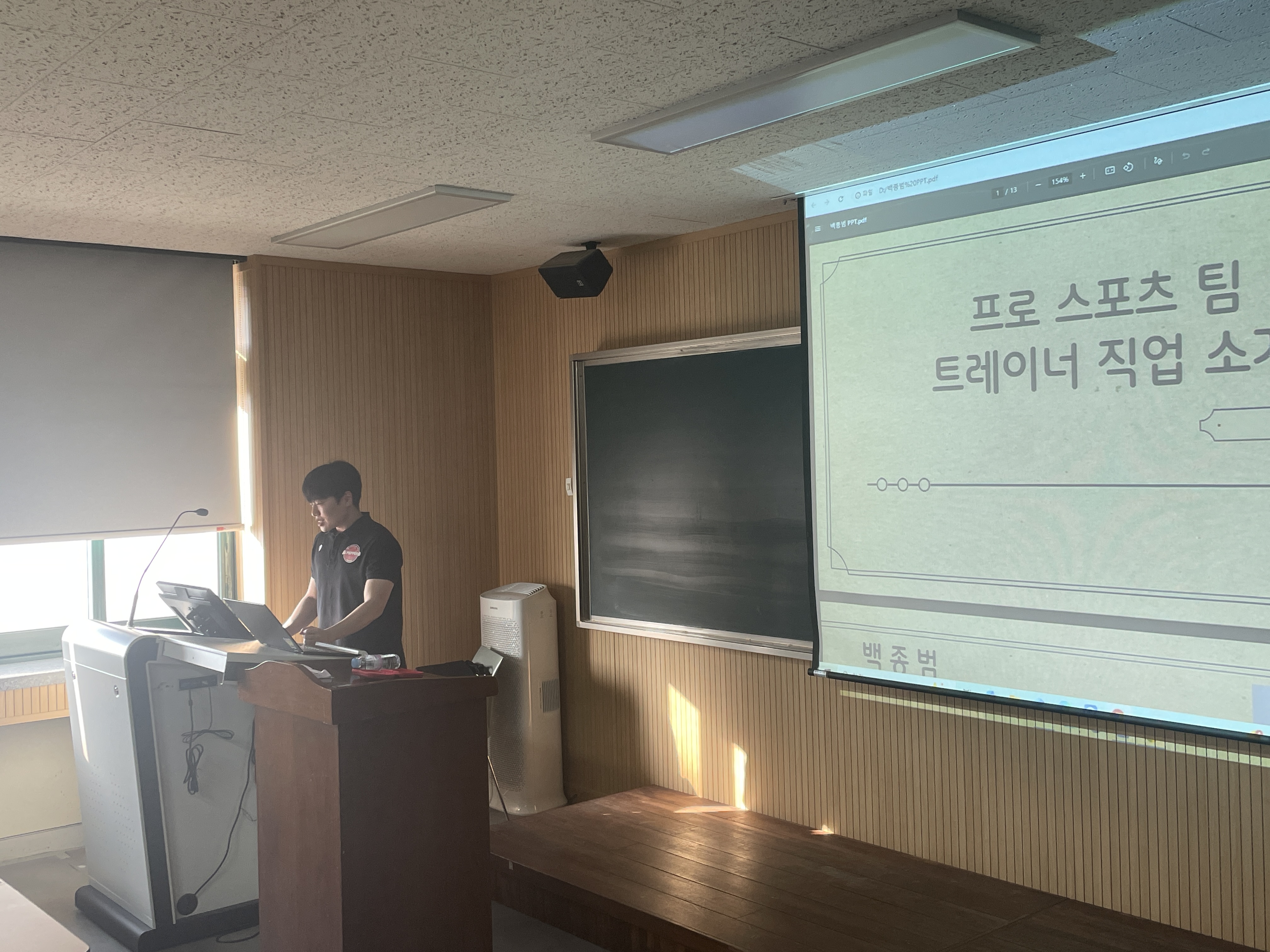
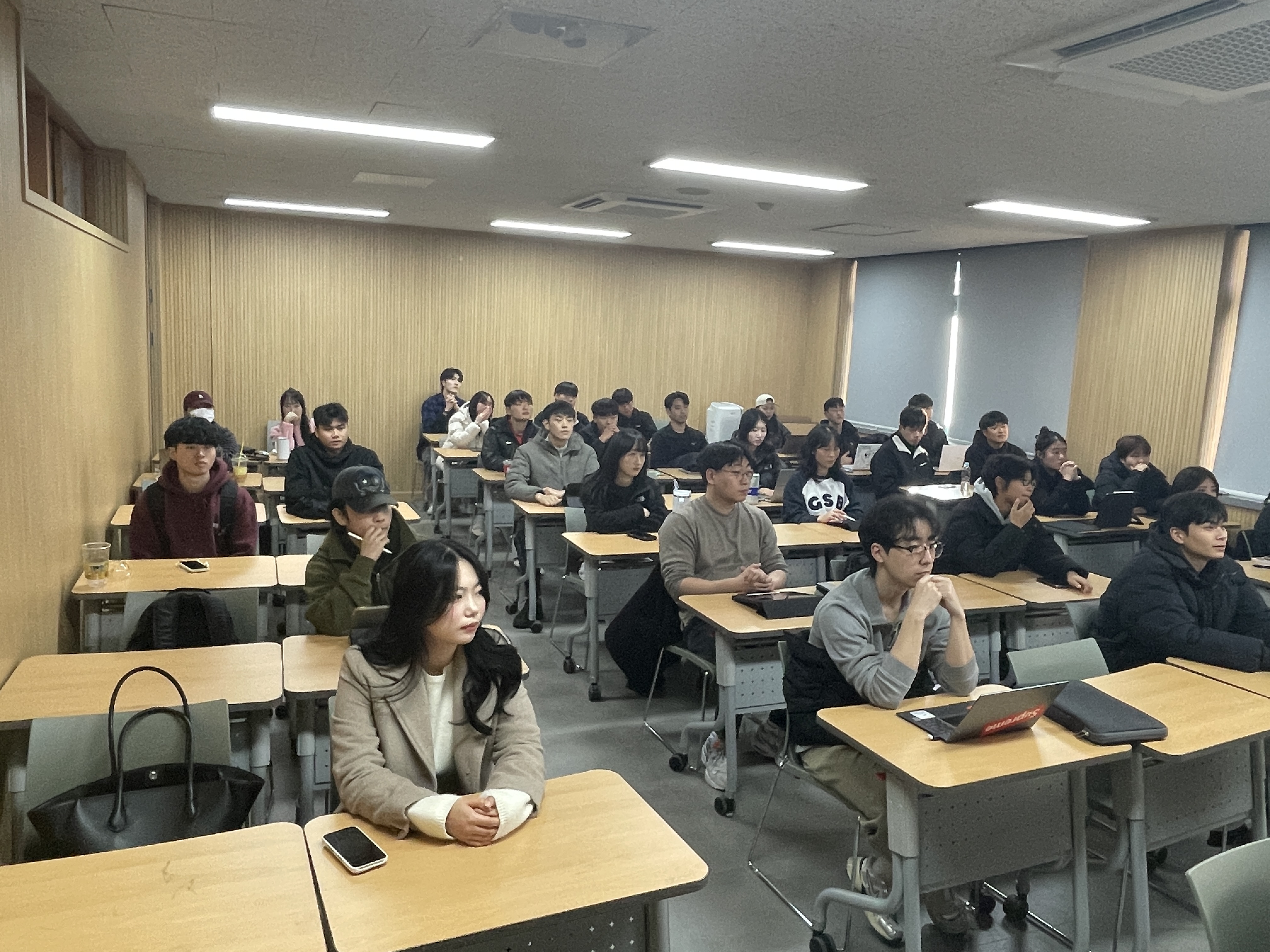
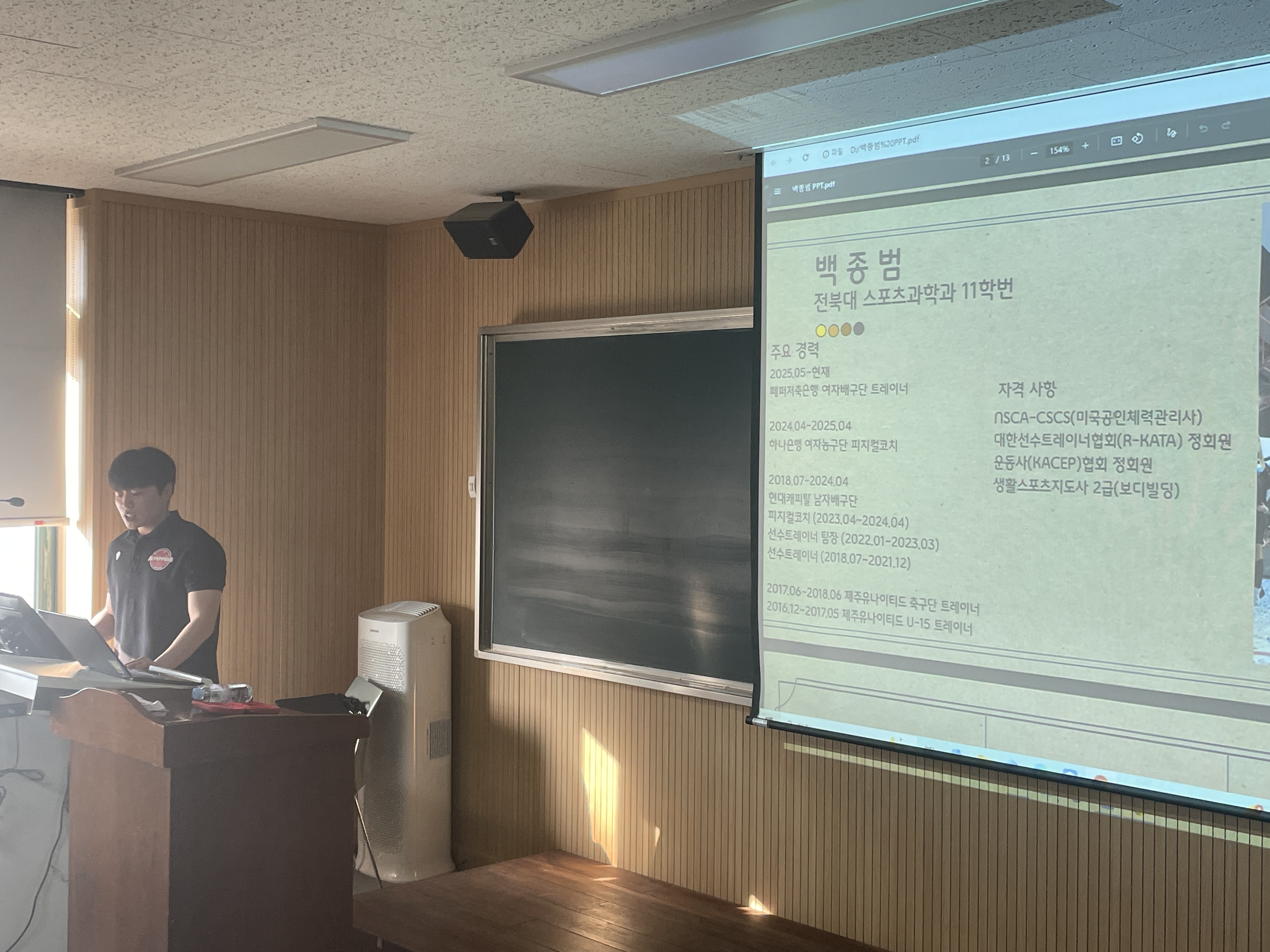
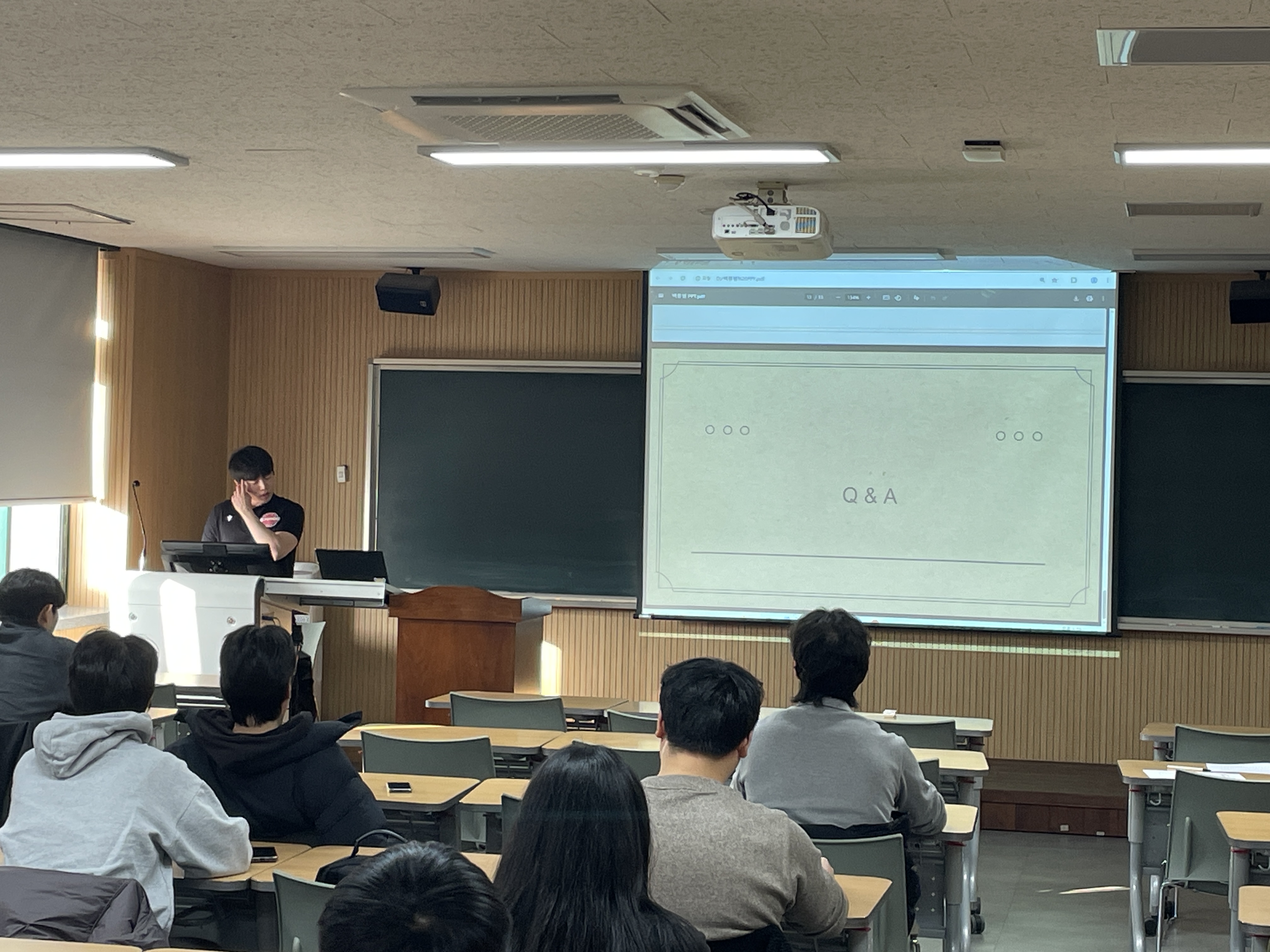
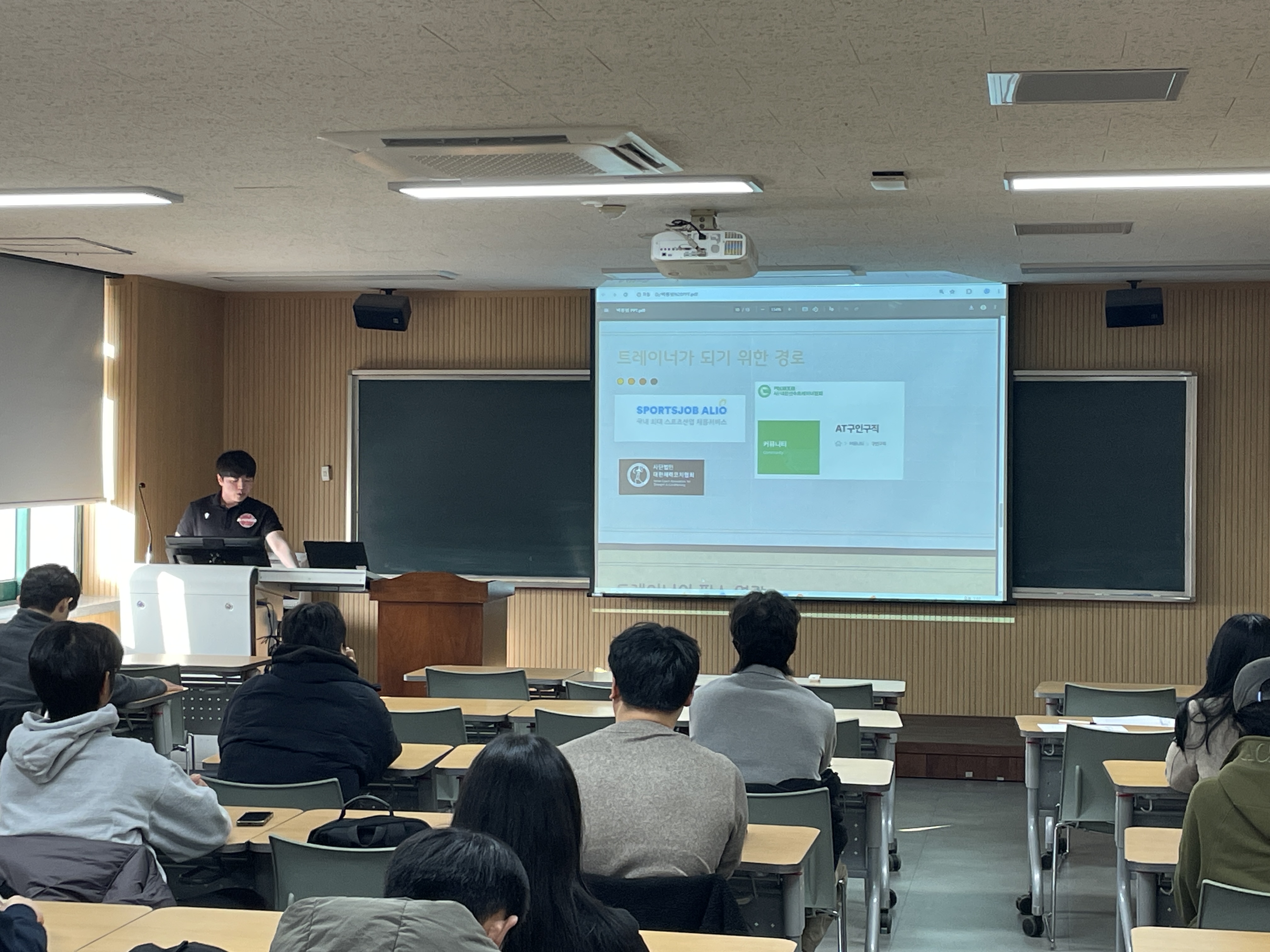
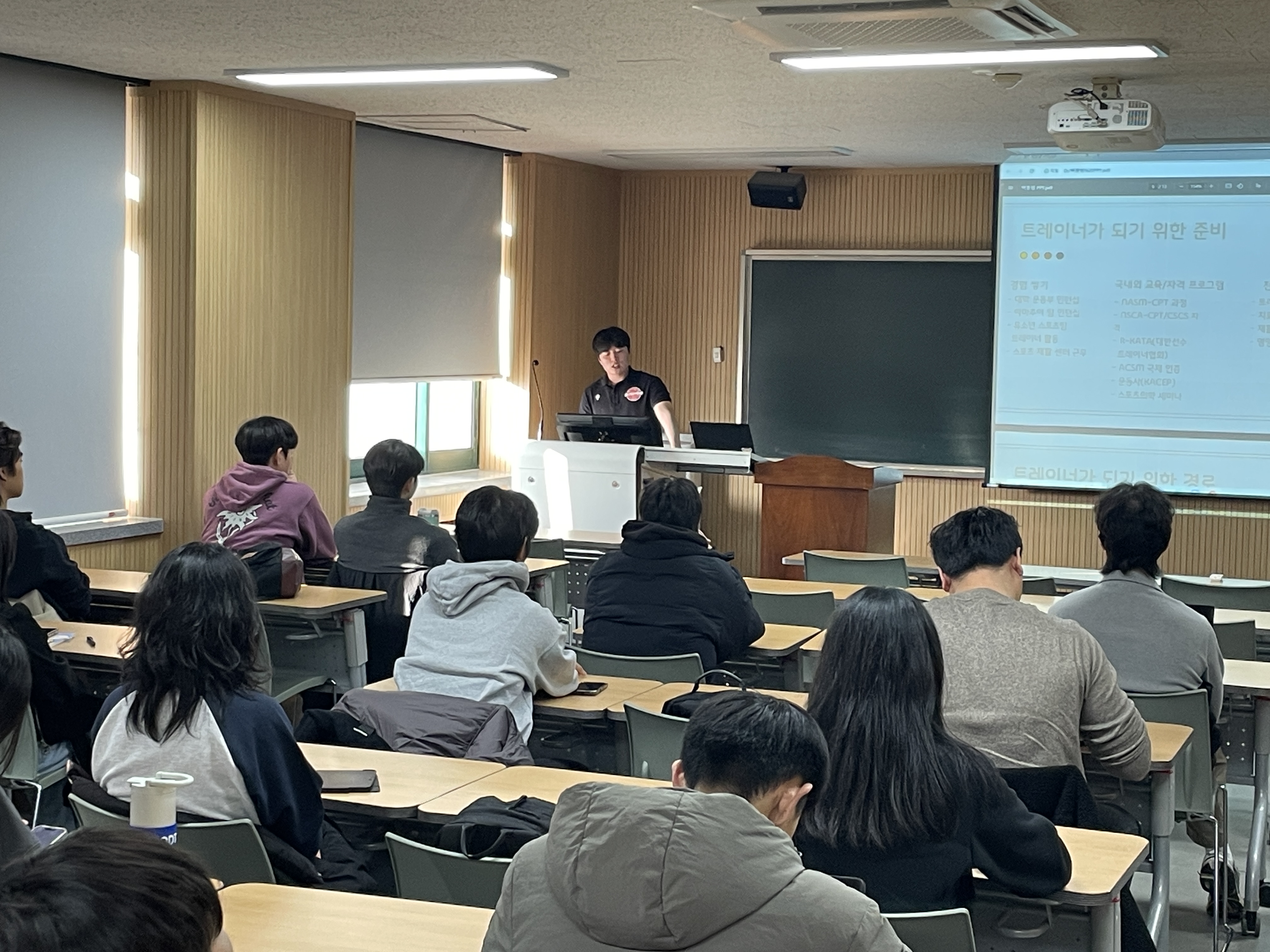
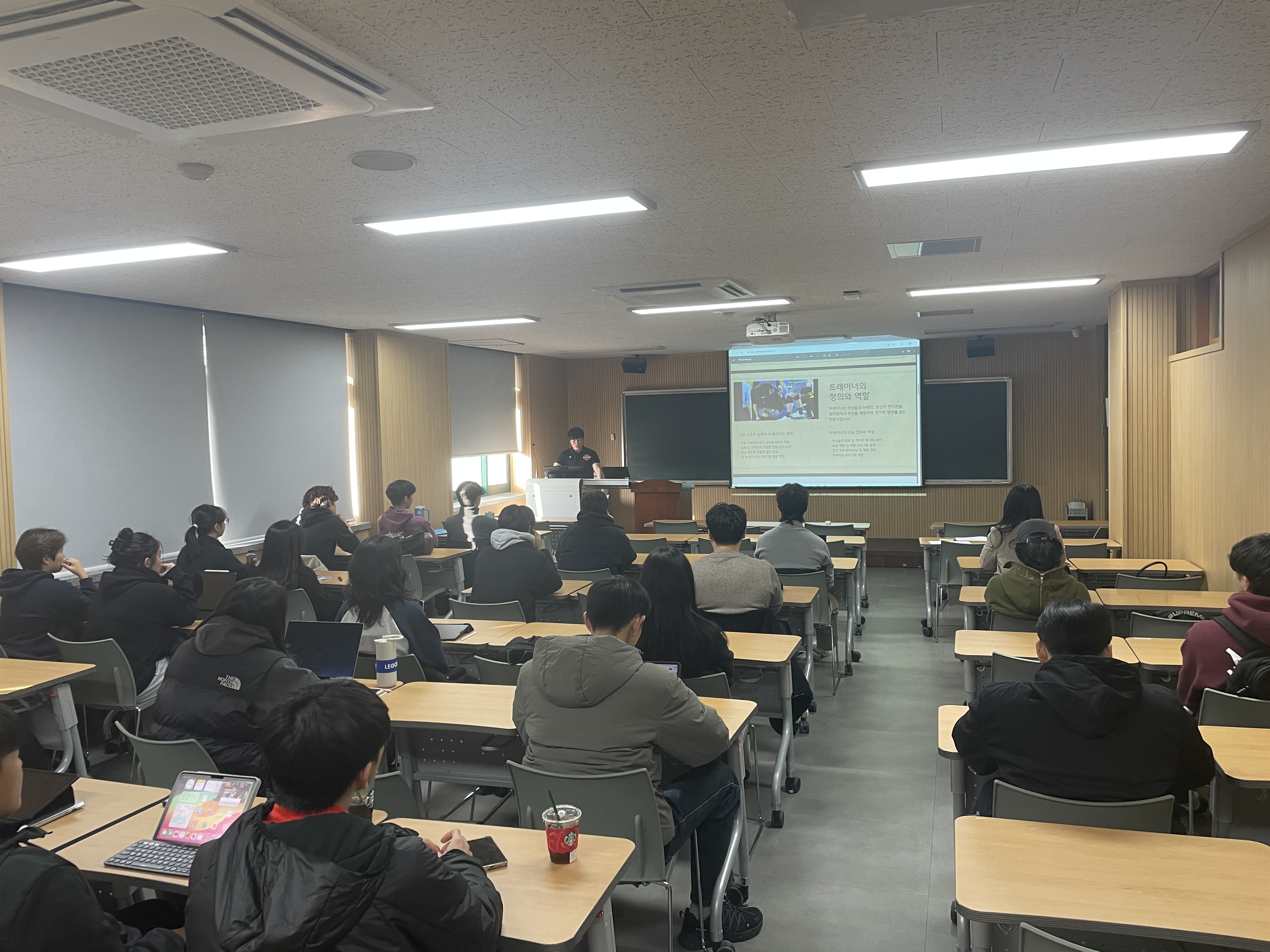
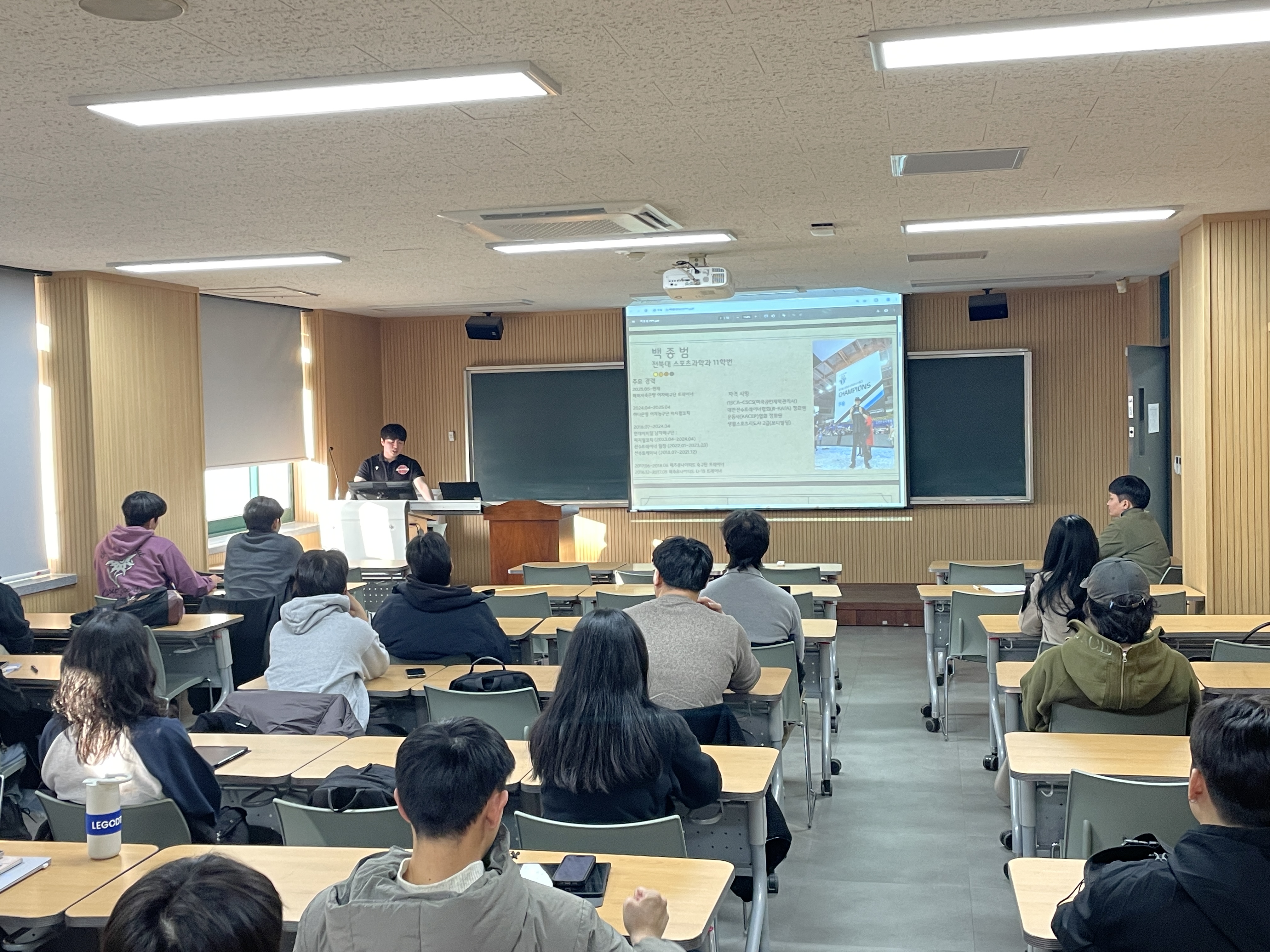
On December 1, 2025 (Monday), the Department of Sports Science at Jeonbuk National University held the first session of Big Data Lecture Day 2, featuring Jongbeom Baek, Athletic Trainer of the AI Pepper Savings Bank Women’s Volleyball Team.
The lecture, titled “Practical Roles of Athletic Trainers and Physical Coaches,” provided students with valuable insights into the realities of working in professional sports organizations and offered practical guidance for career planning.
■ Key Highlights from the Lecture
1. Recruitment Period for Athletic Trainers
Trainer Baek emphasized that most recruitment announcements for athletic trainers are posted during summer and winter off-seasons, encouraging students to actively monitor openings during these periods.
2. Is Graduate School Required for Employment in Pro Teams?
For entry-level trainer positions, graduate degrees are not a major requirement. Instead, teams focus on the applicant’s professional certifications, practical preparation, seminar participation, and commitment to the profession.
Language test scores are also generally not prioritized.
3. Professional Certifications
For current students, obtaining the Health Exercise Manager License is considered essential. Trainer Baek also recommended pursuing internationally recognized certifications such as NSCA-CSCS, which can strengthen employment prospects.
4. Transition from Athletic Trainer to Physical Coach
Baek shared his own experience of transitioning to a physical coach through a combination of personal preparation and team needs.
He also explained the structural differences in job stability:
-
Athletic trainers often remain with a team even when head coaches change.
-
Physical coaches, however, are more likely to change along with the coaching staff.
5. Qualities Sought in Entry-Level Trainers
Rather than focusing heavily on experience, teams prioritize:
-
Genuine passion and dedication to the profession
-
Professional and appropriate relationships with athletes
-
Proactive communication and a high level of energy
Baek encouraged students to clearly demonstrate these qualities during interviews.
6. Current Work Environment for Trainers
Work conditions vary based on the coaching staff’s leadership style. While some traditional coaches rely less on trainer input, younger coaches tend to incorporate trainer feedback more actively.
With the growing emphasis on data-driven training, the role of athletic trainers is increasingly respected.
7. Salary Structure and Career Growth
Starting salaries tend to be modest (e.g., Baek received less than 20 million KRW at his first team, Jeju United; later starting at 30 million KRW at Hyundai Capital).
Salary levels vary depending on:
-
Corporate vs. citizen clubs
-
Team budget and performance
-
Bonus structures
Importantly, salaries increase significantly with accumulated experience, and team championships often lead to additional raises.
The lecture offered students a realistic and detailed understanding of the roles of athletic trainers and physical coaches, helping them better prepare for careers in professional sports.
The Department of Sports Science will continue hosting expert-led lectures and field-oriented programs to strengthen students’ practical skills and support their career development.